
- Research,
‘CIFRE, a bridge between research and practice’: profile of Justin Guiraud, PhD student in urban planning law and associate at Decker Law Firm
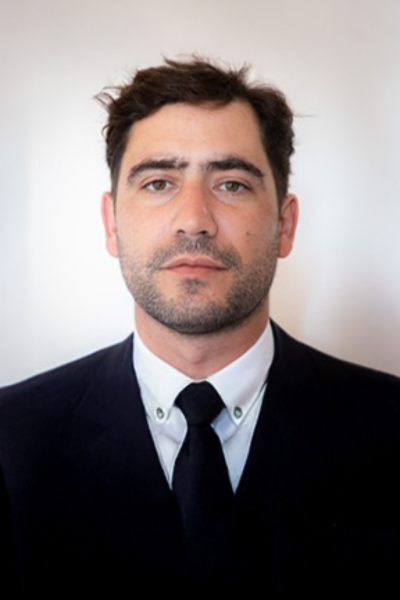
After graduating in 2010 with a Bachelor's degree in Law from UT Capitole, Justin Guiraud has had an unusual career path, marked by perseverance. Following a year-long trip to South America, he returned to Toulouse and completed his Master's degree in Public Law. The young man's life was then turned upside down after a serious accident in the mountains in 2014, followed by two years of rehabilitation.
Eager to continue his studies, he obtained a Master's degree in Public Economic Law in 2017, under the supervision of Lucien Rapp, and worked in a law firm. ‘That's how I discovered the practice of urban planning law, a niche area that has become central to contemporary land use issues,’ he says.
A thesis on the administrative judge in urban planning matters
An employee at Decker, Justin Guiraud decided in 2020 to write a second dissertation – this time a research dissertation – and then to take steps to write a thesis under the CIFRE (Industrial Agreement for Training through Research) scheme. With the support of Maître Mathieu Spinazzé and supervised by Professor Jean-François Giacuzzo, he embarked on his doctoral adventure.
His thesis focuses on the evolution of the role of administrative judges in urban planning, and more specifically on their new role: regularisation. Traditionally limited to annulling illegal acts, administrative judges now see their role expanding: they no longer merely impose sanctions, but now authorise the regularisation of urban projects by purging them of procedural or substantive defects. This transformation, specific to urban planning law, calls into question the very principles of administrative jurisdiction, while reflecting the growing complexity of urban standards and issues.
The judge is now considering the possibilities for saving the projects.
Through both theoretical and practical analysis, the doctoral student explores the concrete mechanisms of this regularisation (deadlines, exchanges with the administration, procedures), as well as its implications for project leaders, local authorities and citizens. This is a highly topical subject at a time when urban planning law is becoming a key lever for regional development.
CIFRE as a springboard
At Decker, Justin Guiraud enjoys an ideal environment for writing his thesis: "They give me time to write and trust me. I'm one of the lucky ones!‘ His research is enriched by his daily practice of urban planning law, a constantly evolving field strongly influenced by environmental issues. ’In thirty years, the code has tripled in volume and its complexity continues to grow," he explains.
While practical experience in the field inspires research, the reverse is also true: writing a thesis teaches doctoral students to take a broader view. Discussions with his thesis supervisor were crucial in helping him structure his approach. ‘Professor Giacuzzo often warned me not to get caught up in the logic of specific cases,’ he explains. ‘He taught me how to reconcile methodology with fieldwork.’
This academic rigour allows him to go beyond the artisanal dimension of the legal profession, where each case is treated in isolation. ‘That's also what motivates me in research: realising that there's not just one way of seeing things, that reality isn't limited to what we observe on a daily basis,’ he says.
Advice for prospective doctoral students
Justin Guiraud emphasises the importance of surrounding yourself with mentors and professionals who have had similar experiences to your own. He cites the example of Professor Frédéric Balaguer, who completed a CIFRE research fellowship in local government before being appointed professor at the Université Côte d'Azur. This former lawyer specialising in urban planning law was able to give him valuable advice on time management and building a professional network.
According to the PhD student, CIFRE offers a genuine link between the academic world and the world of work, provided that a balance is struck between the requirements of the thesis and those of the employer. He also warns against the prejudices that can weigh on theses carried out under CIFRE, which are sometimes perceived as ‘professional theses’ or work carried out solely at the request of the employer. To avoid this, he recommends choosing your subject carefully and ensuring that the host organisation allows sufficient time for research. ‘For my part, I can't see how it could have gone any better!’ he concludes enthusiastically.