
- Research,
‘Economic research and the challenges of precariousness’: insights from Christian Hellwig, professor at Toulouse School of Economics
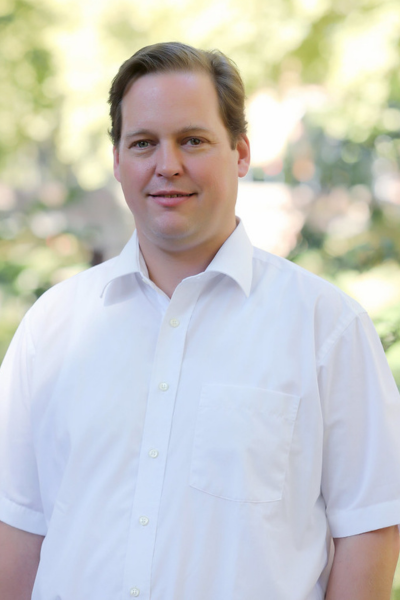
• Your career path has taken you from the London School of Economics to TSE. Why did you make that choice?
After completing my PhD at the London School of Economics (LSE), I taught for eight years at the University of California, Los Angeles (UCLA), in a stimulating academic environment. But in 2010, Toulouse emerged as an ideal European alternative: a centre of economic research that is hard to match, combining scientific excellence and intellectual dynamism with a very pleasant family-friendly living environment.
• You specialised mainly in theoretical macroeconomics at the start of your career. Why did you shift towards applied research on poverty and public policy?
I am, first and foremost, a theorist, trained in macroeconomics and finance. But I have always been fascinated by the links between dynamic models (savings, investment) and individual risks (unemployment, illness). One question has preoccupied me: must we choose between growth and redistribution? Following a course on these topics five years ago, I developed a set of hypotheses that led to a publication on the taxation of labour and capital. Subsequently, together with PhD students, we carried out an empirical comparison of inequalities in wealth and consumption. We realised that, in economics, the rich had been studied far more than the poor. Yet precariousness has a profound influence on social well-being and individual choices (education, employment). In a world free from the risk of material hardship, people would be freer to pursue their passions. We would have more artists, for example.
• Your ERC project is based on previously unpublished data. How did you obtain it?
It all began with one of our former PhD students, Alexandre Gaillard, who told us about Restos du Cœur. Their data, which has been digitised since 2017, covers 400,000 households per year – that is, more than 5 million individuals over the entire 8-year observation period. It is an exceptional dataset, unrivalled in Europe. The data includes income and expenditure (primarily on housing) and enables us to track poverty trends at a national level. We are currently cross-referencing it with data from the CAF to analyse entries into and exits from the benefits system.
• What are the most significant findings of this study?
Firstly, children are over-represented: those aged 0-9 account for twice their share of the general population. This raises the question of the long-term consequences for these children. Secondly, episodes of poverty are short but frequent: 90 per cent of households remain registered with the Restos du Cœur for no more than three years, but 8 per cent of the French population (5 million people) have used their services over an eight-year period. Extreme poverty is a widespread risk, not a marginal one.
There is also a heightened vulnerability to economic shocks: a 10 per cent rise in rents or unemployment leads to a proportional increase in requests for assistance. The poor are 5 to 10 times more vulnerable to economic cycles than the average person.
Finally, there are marked geographical differences: inflows are extremely sensitive to local economic conditions. For example, a rise in rents in Toulouse leads to an immediate increase in demand at the Restos du Cœur and in homelessness.
There is also a heightened vulnerability to economic shocks: a 10 per cent rise in rents or unemployment leads to a proportional increase in requests for assistance. The poor are 5 to 10 times more vulnerable to economic cycles than the average person.
Finally, there are marked geographical differences: inflows are extremely sensitive to local economic conditions. For example, a rise in rents in Toulouse leads to an immediate increase in demand at the Restos du Cœur and in homelessness.
• Does this project have an international dimension?
Absolutely. We are already comparing our findings with similar data from the United States and the UK. The mechanisms are comparable, even though each country has its own specific characteristics. For example, in the United States, inequalities are more pronounced, but the policy responses differ. A fundamental question is whether these policies should be devised at national or local level.
• You have just published your first paper on extreme poverty. What impact on society do you expect it to have?
We have been entrusted with 2 million euros over five years. Imagine what this sum would mean for the Restos du Cœur. It reminds us of the importance of the societal impact of our work, which can inspire more targeted public policies by providing a better understanding of the needs of people in precarious circumstances. The initial findings, which are now public, reveal little-known realities that could inform the decisions of institutions and charities.
• You supervise a large number of PhD students. What motivates you in this role?
It’s part of a researcher’s job, and it’s one of the most enjoyable aspects. Working with PhD students is a constant exchange. I learn as much from them as they learn from me. In fact, their talents and methodological approaches have encouraged me to broaden the scope of my own research. Without Alexandre Gaillard, who put us on the trail of the Restos du Cœur data, we wouldn’t be where we are today. It’s also a way of staying at the cutting edge of methodology and exploring new topics.
• You were scientific director at TSE for five years. What did you gain from that experience?
It was an administrative role, serving the institution. It involved coordinating activities relating to research development, evaluation and scientific strategy. My term of office coincided with the pandemic and a period of institutional transformation. All of a sudden, we had to grapple with new challenges, such as maintaining an intellectual life remotely or rethinking TSE’s autonomy. Against this backdrop, we found ourselves questioning TSE’s current and future identity: ‘Do we want to be the LSE on the Garonne or the MIT on the Garonne?’ These reflections were intellectually very stimulating.