- Research,
EvoStar 2026: a look back at the European AI summit in Toulouse
from April 8, 2026 to April 10, 2026
Rempart building
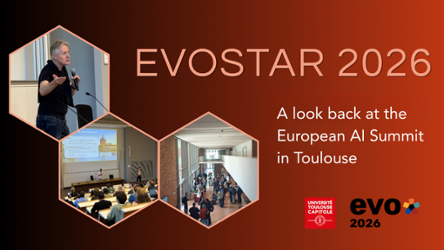
From 8 to 10 April, the Rempart building buzzed with activity during the EvoStar 2026 conference. Co-organised by the SPECIES association in partnership with ISAE-SUPAERO and the Toulouse Capitole University, this major European event brought together numerous researchers keen to explore more sustainable and effective artificial intelligence, directly inspired by nature.
A synergy between nature and algorithms
Over the course of three days, the lecture theatres on our campus hosted international experts who came together to discuss the latest advances in evolutionary computation and bio-inspired AI. The main aim is to study biological mechanisms in order to optimise algorithms in fields as diverse as healthcare, cybersecurity, video games and digital art.
A showcase for the Faculty of Computer Science
Although the event is organised by the European association SPECIES, its local success relies on close collaboration with ISAE-SUPAERO and the Toulouse Capitole University. The Faculty of Computer Science played a central role in this organisation, represented by Sylvain Cussat-Blanc, a professor at the Faculty and researcher at IRIT, alongside Dennis Wilson. This involvement highlights the international standing of our academic staff.
A place for meeting and scientific exchange
Beyond the plenary sessions, the Rempart building became a real hub for discussion. Informal gatherings in the lobby and presentations of research projects helped to forge links between established experts and early-career researchers. This year’s event also placed an emphasis on ethics and inclusion, values dear to our institution, ensuring a research environment characterised by integrity and openness to diversity.
A promising outlook for the future
The success of EvoStar 2026 confirms Toulouse’s position as a centre of excellence in artificial intelligence. For the Faculty of Computer Science, hosting such a network is a key driver for inspiring our students and strengthening future scientific collaboration on an international scale.
Updated on April 13, 2026