- Research,
‘Procedural Efficiency: An Essay on a Theory Applied to Criminal Law’: a profile of Noémie Martire, a PhD student in private law and criminal sciences at Toulouse School of Law
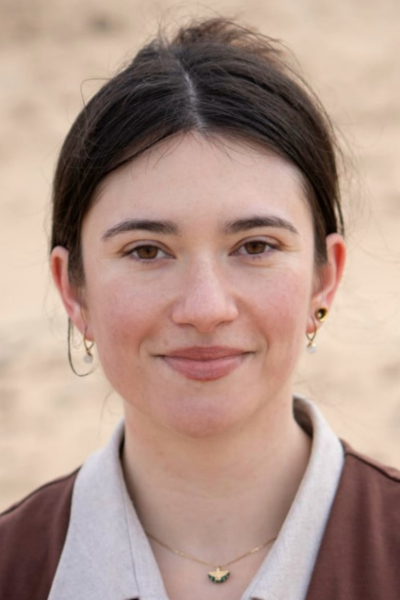
After completing a bachelor’s degree in private law, Noémie Martire enrolled on the Master’s programme in Criminal Law and Criminology at UT Capitole. At the same time, she graduated from the Collège Supérieur de Droit and obtained a Certificate in Criminology and Criminal Sciences. She then applied for the Franco-Canadian Master’s 2 programme, run in partnership with Laval University in Quebec. She emerged with two qualifications: the French Master’s 2, as well as an LL.M., the Canadian Master of Laws. It was a pivotal year abroad, which she had been planning since secondary school. “I’d known since my final year of secondary school that this Franco-Canadian Master’s programme existed. That’s what led me to choose to study law at the University of Toulouse Capitole,” she explains.
Having topped her year, the young woman was awarded a doctoral scholarship and began her PhD in September 2020. After three years devoted to research, she became a temporary teaching and research assistant (ATER), then a contract-based lecturer and researcher. She is now in her seventh year of her PhD and hopes to defend her thesis next year.
It all began with a Master’s thesis entitled ‘The Adjudication of Crimes’, at a time when, in late 2019, the trial scheme for criminal courts was the subject of debate. These courts, which are similar to a criminal court of assizes but without a lay jury, prompted the PhD student to ask: can economic considerations really change the way crimes are tried?
During her semester at Laval University, she noticed that the pursuit of efficiency also underpins the Canadian criminal justice system. She therefore revised the topic of her dissertation to ‘The transformation of traditional criminal trial procedures under the pressure of procedural efficiency: a Franco-Canadian approach’, before using it as the core of her thesis.
For procedural efficiency is a blind spot in legal theory. “There is no thesis on procedural efficiency in its own right. There are studies on the efficiency of specific mechanisms, but no study dedicated, more broadly, to efficiency in procedure,” she notes. Since beginning her PhD, her approach has become clearer: “the concern for procedural economy does not sum up the objective of procedural efficiency.”
Under the supervision of Antoine Botton, Professor of Private Law and Criminal Sciences, and affiliated with the Institute for Research in European, International and Comparative Law (IRDEIC), she is developing a general theory of this concept, drawing on sources from criminal law, procedural law and comparative law. Beyond the field of criminal law, this theory aims to shed light on legislative drafting as a whole.
Her research is based on an analysis of criminal law reforms, case law and legal doctrine. The aim? To propose a definition of the concept, examine how it is assessed, analyse the causes of its ineffectiveness, propose solutions and inform the choices made by the legislator. An approach that is both theoretical and grounded in reality.
Winner of the People’s Choice Award at the ‘My Thesis in 180 Seconds’ competition in 2025, Noémie Martire went on to win both the Jury Prize and the People’s Choice Award at the first European Doctoral Day in 2026, which brought together the three doctoral schools at UT Capitole.
Experiences that have permanently transformed her writing style. “There was a before and an after My Thesis in 180 Seconds”, she says. For the researcher, a thesis is meant to be shared: “You don’t write for yourself; you write for others”. She concludes, not without a touch of irony, given how closely her remarks mirror her subject: “A thesis must meet certain expectations. If you want to be understood, you have to get to the heart of the matter. One idea per sentence. In short, be effective”.
Elected as the representative for PhD students at the Doctoral School of Law and Political Science, Noémie Martire attends meetings and champions the role of early-career researchers within the university. “The university is certainly made up of tenured academics, but also of PhD students and future academics,” she points out. This forum is fully open to PhD students at the Doctoral School, under the leadership of Guillaume Beaussonie.
Her advice to prospective PhD students? Find a topic that inspires them, be realistic about the challenges of a demanding programme, and appreciate the freedom that research offers: “There are few, if any, career paths or professions where one feels as free.”
Although she was initially drawn to a career as a lawyer, she is now heading towards academia. What was the turning point? Her first year of her Master’s degree, and in particular Antoine Botton’s lecture on procedural law, which gave her “the keys to understanding procedural logic and its underlying issues”.
Whilst working on her PhD, Noémie Martire taught at all levels, from the first year of the Bachelor’s degree to the second year of the Master’s degree: an introduction to private law in the first year of the Bachelor’s degree, general criminal law in the second year for international and dual-degree programmes, property law in the third year of the Bachelor’s degree, advanced criminal procedure and procedural law in the first year of the Master’s degree, and advanced civil procedure in the second year of the Master’s degree… Every course, at every level, includes an element of simplification: a first-year course is not approached in the same way as a Master’s course.
Having successfully defended her thesis, the young woman is aiming to gain accreditation from the National Council of Universities (CNU), followed by a post as a senior lecturer, whilst keeping her options open regarding the Agrégation competitive examination.
Having topped her year, the young woman was awarded a doctoral scholarship and began her PhD in September 2020. After three years devoted to research, she became a temporary teaching and research assistant (ATER), then a contract-based lecturer and researcher. She is now in her seventh year of her PhD and hopes to defend her thesis next year.
Shedding light on a blind spot in the law
It all began with a Master’s thesis entitled ‘The Adjudication of Crimes’, at a time when, in late 2019, the trial scheme for criminal courts was the subject of debate. These courts, which are similar to a criminal court of assizes but without a lay jury, prompted the PhD student to ask: can economic considerations really change the way crimes are tried?
During her semester at Laval University, she noticed that the pursuit of efficiency also underpins the Canadian criminal justice system. She therefore revised the topic of her dissertation to ‘The transformation of traditional criminal trial procedures under the pressure of procedural efficiency: a Franco-Canadian approach’, before using it as the core of her thesis.
For procedural efficiency is a blind spot in legal theory. “There is no thesis on procedural efficiency in its own right. There are studies on the efficiency of specific mechanisms, but no study dedicated, more broadly, to efficiency in procedure,” she notes. Since beginning her PhD, her approach has become clearer: “the concern for procedural economy does not sum up the objective of procedural efficiency.”
Under the supervision of Antoine Botton, Professor of Private Law and Criminal Sciences, and affiliated with the Institute for Research in European, International and Comparative Law (IRDEIC), she is developing a general theory of this concept, drawing on sources from criminal law, procedural law and comparative law. Beyond the field of criminal law, this theory aims to shed light on legislative drafting as a whole.
Her research is based on an analysis of criminal law reforms, case law and legal doctrine. The aim? To propose a definition of the concept, examine how it is assessed, analyse the causes of its ineffectiveness, propose solutions and inform the choices made by the legislator. An approach that is both theoretical and grounded in reality.
To examine procedural efficiency is to explore the purpose of judicial reforms.
The drive for science communication
Winner of the People’s Choice Award at the ‘My Thesis in 180 Seconds’ competition in 2025, Noémie Martire went on to win both the Jury Prize and the People’s Choice Award at the first European Doctoral Day in 2026, which brought together the three doctoral schools at UT Capitole.
Experiences that have permanently transformed her writing style. “There was a before and an after My Thesis in 180 Seconds”, she says. For the researcher, a thesis is meant to be shared: “You don’t write for yourself; you write for others”. She concludes, not without a touch of irony, given how closely her remarks mirror her subject: “A thesis must meet certain expectations. If you want to be understood, you have to get to the heart of the matter. One idea per sentence. In short, be effective”.
Giving a voice to PhD students
Elected as the representative for PhD students at the Doctoral School of Law and Political Science, Noémie Martire attends meetings and champions the role of early-career researchers within the university. “The university is certainly made up of tenured academics, but also of PhD students and future academics,” she points out. This forum is fully open to PhD students at the Doctoral School, under the leadership of Guillaume Beaussonie.
Her advice to prospective PhD students? Find a topic that inspires them, be realistic about the challenges of a demanding programme, and appreciate the freedom that research offers: “There are few, if any, career paths or professions where one feels as free.”
A calling as a lecturer and researcher
Although she was initially drawn to a career as a lawyer, she is now heading towards academia. What was the turning point? Her first year of her Master’s degree, and in particular Antoine Botton’s lecture on procedural law, which gave her “the keys to understanding procedural logic and its underlying issues”.
Whilst working on her PhD, Noémie Martire taught at all levels, from the first year of the Bachelor’s degree to the second year of the Master’s degree: an introduction to private law in the first year of the Bachelor’s degree, general criminal law in the second year for international and dual-degree programmes, property law in the third year of the Bachelor’s degree, advanced criminal procedure and procedural law in the first year of the Master’s degree, and advanced civil procedure in the second year of the Master’s degree… Every course, at every level, includes an element of simplification: a first-year course is not approached in the same way as a Master’s course.
Having successfully defended her thesis, the young woman is aiming to gain accreditation from the National Council of Universities (CNU), followed by a post as a senior lecturer, whilst keeping her options open regarding the Agrégation competitive examination.