
- Research,
The Best AI Paper Award Presented to Researchers from IRIT/UT Capitole at JFSMA 2026
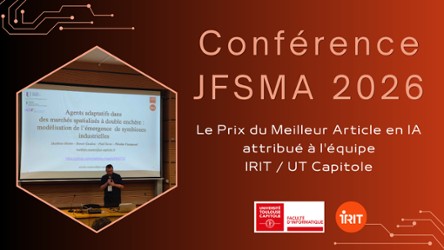
on the July 3, 2026
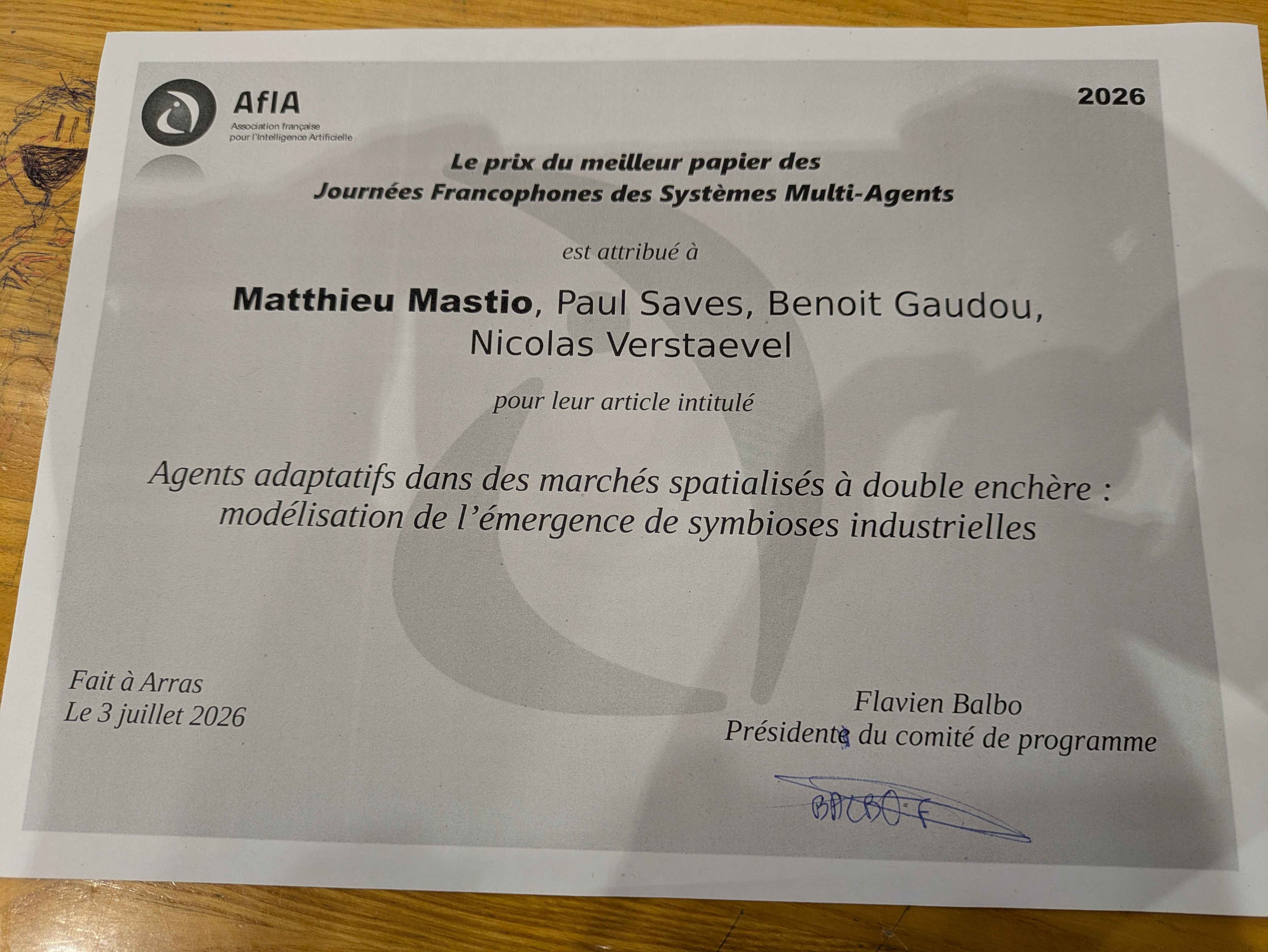
Another major accolade for research at the Toulouse Capitole University! The team from the Faculty of Computer Science and IRIT won the Best Paper Award at the 2026 Francophone Conference on Multi-Agent Systems (JFSMA) thanks to an innovative virtual model that applies artificial intelligence to industrial recycling.
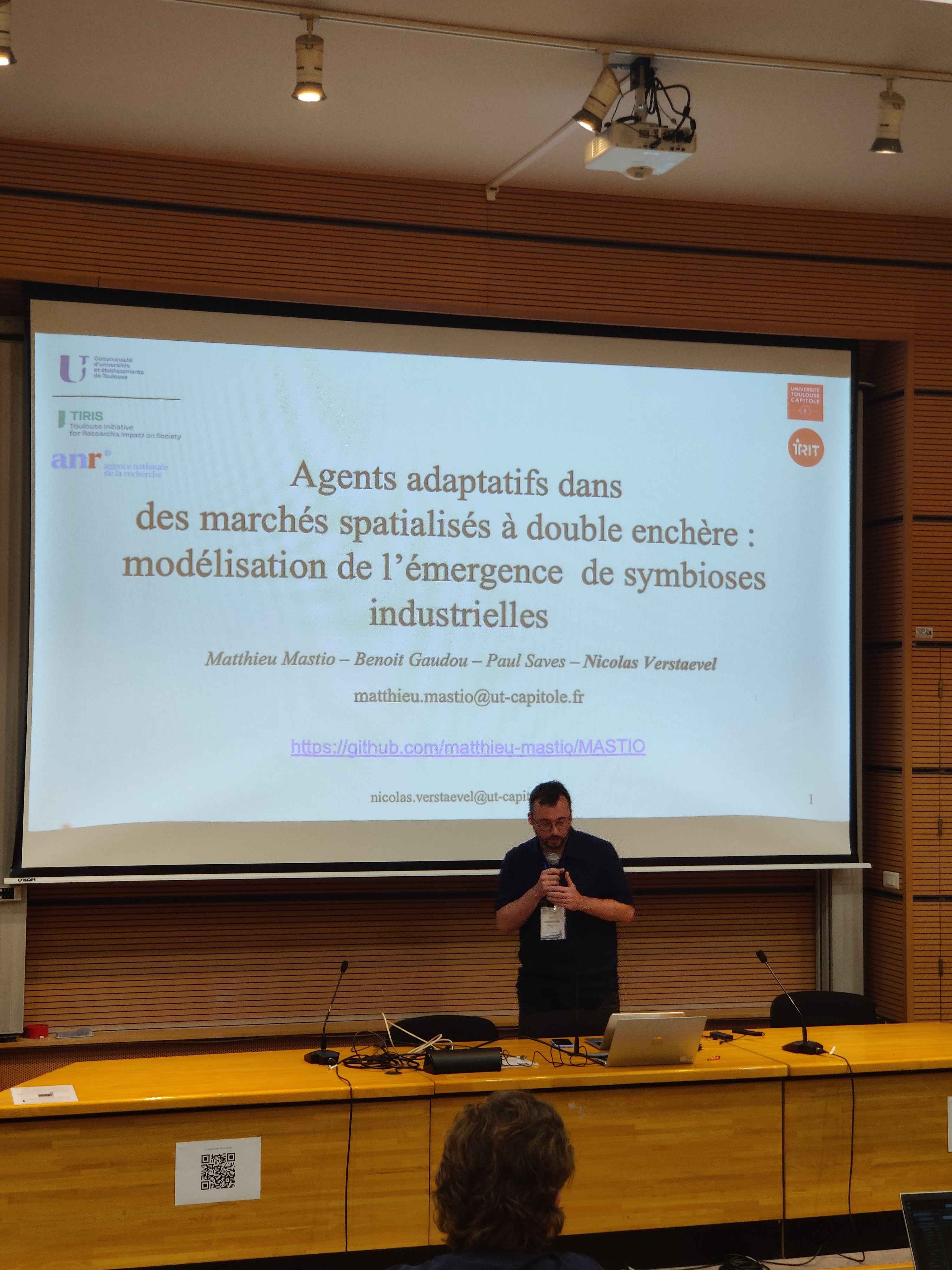
Research conducted at the Faculty of Computer Science at the Toulouse Capitole University and at the Toulouse Institute for Computer Science Research (IRIT) has just received prestigious national recognition. At JFSMA 2026—the flagship event of the Artificial Intelligence Platform (PFIA) organized by the French Artificial Intelligence Association (AFIA) in Arras—our team won the Best Paper Award. This major distinction highlights the concrete contribution of algorithms to addressing the challenges of the ecological transition.
Optimising large-scale industrial recycling: the challenge addressed in this article
Behind the specific scientific title, “Adaptive Agents in Spatialised Double-Auction Markets for Modeling the Emergence of Industrial Symbioses,” lies a concrete environmental and economic challenge. As the team summarises, the goal is to answer a simple question: How can we ensure that one factory’s waste automatically becomes the raw material for its neighbor’s?
This concept, known as industrial symbiosis, is a pillar of the circular economy. However, its practical implementation is often hampered by logistical realities, geographic distances, and profitability constraints.
A decentralised virtual marketplace powered by AI
To overcome these obstacles, the authors of the article—Matthieu Mastio, Benoit Gaudou, Paul Saves, and Nicolas Verstaevel—chose to leverage the power of multi-agent systems.
In the simulation model developed by Matthieu Mastio:
- Each firm in a region is modeled by an adaptive agent (an AI) capable of negotiating in real time.
- Trading in industrial byproducts is organised through a double-auction mechanism.
- Using reinforcement learning, these agents autonomously factor in geographic distance (spatialised market), transportation costs, waste disposal fees, and local resource scarcity to adjust their prices.
The ultimate aim is to use these algorithms to simulate and identify the exact conditions that enable stable, viable and efficient industrial recycling networks to emerge naturally at a regional level.
A major accolade for the Toulouse AI community
This award, presented by the JFSMA jury and the AFIA, is a testament to the vitality of AI research on our campus. It serves as a reminder that the ecological transition will also depend on algorithmic innovation and the processing of big data.
The Faculty of Computer Science extends its warmest congratulations to Matthieu Mastio, Benoit Gaudou, Paul Saves and Nicolas Verstaevel on this remarkable achievement!
Partners :

Updated on July 17, 2026