
- Research,
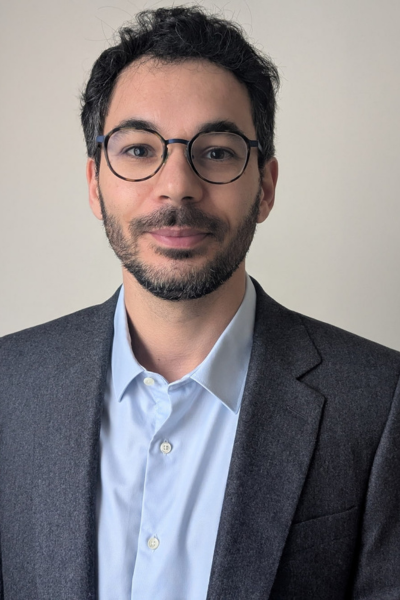
‘Exploring the challenges facing French aerospace defence’: words from Florent Pouponneau, lecturer and researcher at the head of the AERODS centre of excellence
• What does the call for projects launched by the Ministry of Defence involve?
Every five years, the Ministry of Defence launches a call for projects to fund centres of excellence. Its aim is to strengthen the pool of French researchers working on defence issues. The funding is substantial: nearly €2 million over five years.
• Why did you answer it?
The current international context, marked by rising rivalries between major powers, the return of war in Europe, the development of new technologies and the threat of US disengagement from European defence, calls for a study of the armament policies of France and the European Union. Despite the importance of the issues at stake, few social science researchers tackle this area of public policy due to its technical nature and the difficulties of accessing the field of investigation. Drawing on our ecosystem in Toulouse, I wanted to propose a research project focused on aerospace defence. With the support of my colleague Maïlys Mangin, now deputy director of the centre, I submitted our AERODS project in December 2024.
• What is the objective of this research project?
The project brings together some fifteen researchers from our university (Toulouse School of Law, Faculty of Information Technology, Toulouse School of Management, Toulouse School of Economics and Sciences Po Toulouse) in law, economics, management, computer science and political science. Drawing on this multidisciplinary approach, we aim to describe and explain the political, legal, administrative, economic and industrial constraints that, at all levels – national, European and international – weigh on the various public and private actors involved in French arms policy in the aerospace sector.
• In practical terms, what can you bring to the Ministry of Defence?
This armament policy requires the State to effectively mobilise and support defence industries so that they can rapidly increase their production and innovation capacities while keeping costs under control. However, as the President of the Republic recently acknowledged, France's rearmament programme is struggling to get off the ground, at a time when the international context is becoming increasingly tense. Understanding and communicating the constraints facing the various players can help to overcome them more effectively.
• How will you work with defence stakeholders?
To carry out its research activities and offer relevant expertise, AERODS will rely on partnerships with ISAE-SUPAERO and ONERA, the prestigious engineering school and France's leading aerospace research centre, as well as partnerships with manufacturers in the defence sector. Our centre will also facilitate exchanges between defence stakeholders and the academic world through the organisation of workshops, conferences and seminars in the Chatham House format.
• Does the project include a training component?
Yes, it is a key element. In addition to our research activities, we will develop a range of training courses aimed at practitioners (industrial executives, engineers, officers, etc.). These courses will cover, among other things, export controls and economic sanctions, new challenges in space law and policy, and armament policies and industrial strategies in Europe.
• Does your next book, due out in March, deal with the same theme?
Not quite. My next book, which will be published in March, explores another aspect of French defence policy: French military intervention in Mali between 2013 and 2022, in the name of the fight against terrorism. The aim is to analyse what being a ‘middle power’ and a ‘former great power’ actually means in terms of constraints for French diplomats, military personnel and politicians. In doing so, the objective is to articulate, within a coherent theoretical framework, the small bureaucratic and political struggles within the state and the broader logic of power between states. From this perspective, I explore the entry into war, conflicts within the administration, the practical realities of military operations on the ground, the discreet military alliance forged with the United States, efforts to ‘Europeanise’ policy, and the search for an honourable exit to avoid the political costs of a predictable failure.
In line with AERODS' concerns, I am studying what dependence on the United States for the use of drones specifically entails. This work has allowed me to familiarise myself with the military environment, whereas I previously worked more on diplomatic practices. I have conducted nearly 200 interviews with actors from a wide range of positions, from a former head of state to rank-and-file soldiers.
In line with AERODS' concerns, I am studying what dependence on the United States for the use of drones specifically entails. This work has allowed me to familiarise myself with the military environment, whereas I previously worked more on diplomatic practices. I have conducted nearly 200 interviews with actors from a wide range of positions, from a former head of state to rank-and-file soldiers.